
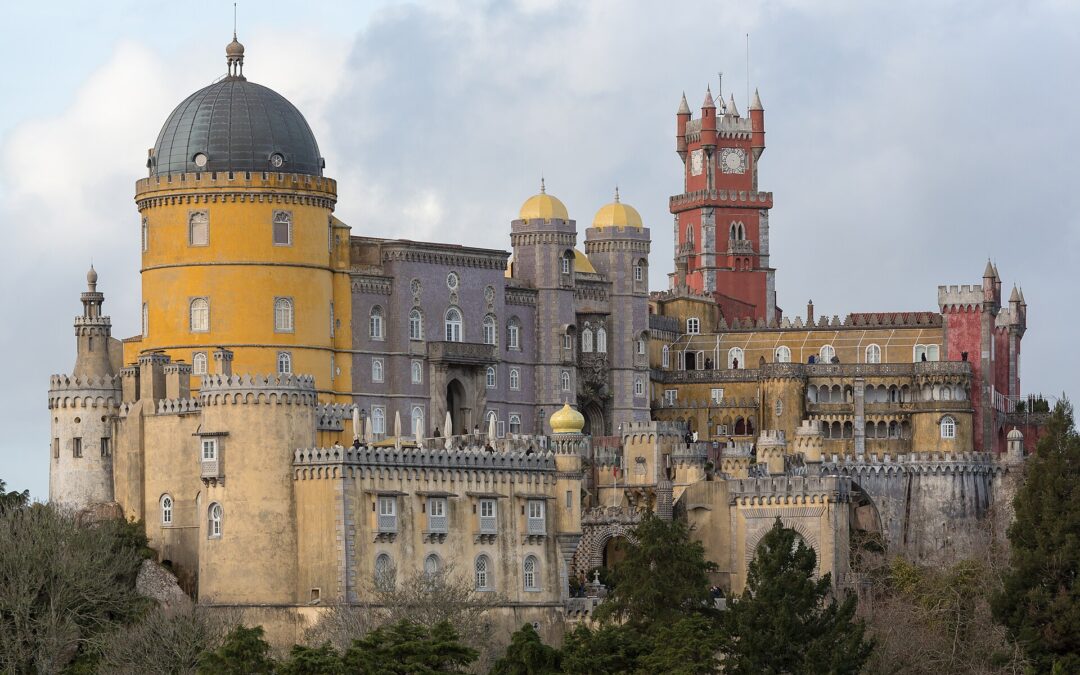
A red-and-yellow palace on a misty hilltop, a spiral well that plunges into the earth, castle walls snaking along the ridge and the westernmost cape of mainland Europe: Sintra feels like a fairy tale come to life. Here is how to enjoy it with children, without the queues and the stress.
Just 30 kilometres from Lisbon, the green hills of Sintra were the summer playground of Portuguese kings and romantic poets. Today the whole area is a UNESCO World Heritage cultural landscape, dotted with palaces, castles and enchanted gardens hidden in the forest. For families, it is pure magic. Children don’t need to know anything about history to love a castle on a mountaintop.
Sintra is also one of the busiest places in Portugal, though. A little planning makes the difference between a magical day and a long one in queues.
Pena Palace: the fairy-tale castle
Perched on one of the highest peaks of the Sintra hills, the National Palace of Pena is Portugal’s most famous monument. Built in the 19th century for King Ferdinand II on the site of an old monastery, it is a riot of colour and styles: red and yellow walls, onion domes, battlements and a dragon-like Triton guarding an archway. Inside, the royal apartments are preserved as the royal family left them. Outside, the terraces offer views all the way to Lisbon and the Atlantic.
Featured photo: Pena Palace. Photo: CEphoto, Uwe Aranas / Wikimedia Commons, CC BY-SA 3.0
The palace sits inside the vast Pena Park, a romantic forest of exotic trees, lakes, hidden paths and the charming Chalet of the Countess of Edla. With younger children, the park can be as much fun as the palace itself.
Good to know:
- Book a timed ticket online on the official Parques de Sintra website. The palace has fixed entry slots, they are strict about times, and in busy periods they sell out days in advance.
- Children under 6 go free, and there are reduced tickets for children and teenagers and a family ticket.
- From the park gate to the palace is a steep uphill walk of around 20–30 minutes; a small shuttle runs for a fee.
- Pushchairs are difficult inside the palace. Bring a carrier.
Quinta da Regaleira and the Initiation Well
If Pena is the fairy tale, Quinta da Regaleira is the adventure story. This early 20th-century estate, created for the millionaire António Augusto Carvalho Monteiro with the Italian architect Luigi Manini, is full of symbols, grottoes, towers, lakes and secret tunnels. Children feel like explorers here.
The star is the Initiation Well, a spiral staircase that winds about 27 metres down into the ground, ending in tunnels that lead out to a lake with stepping stones. It is unforgettable, but there is a queue.
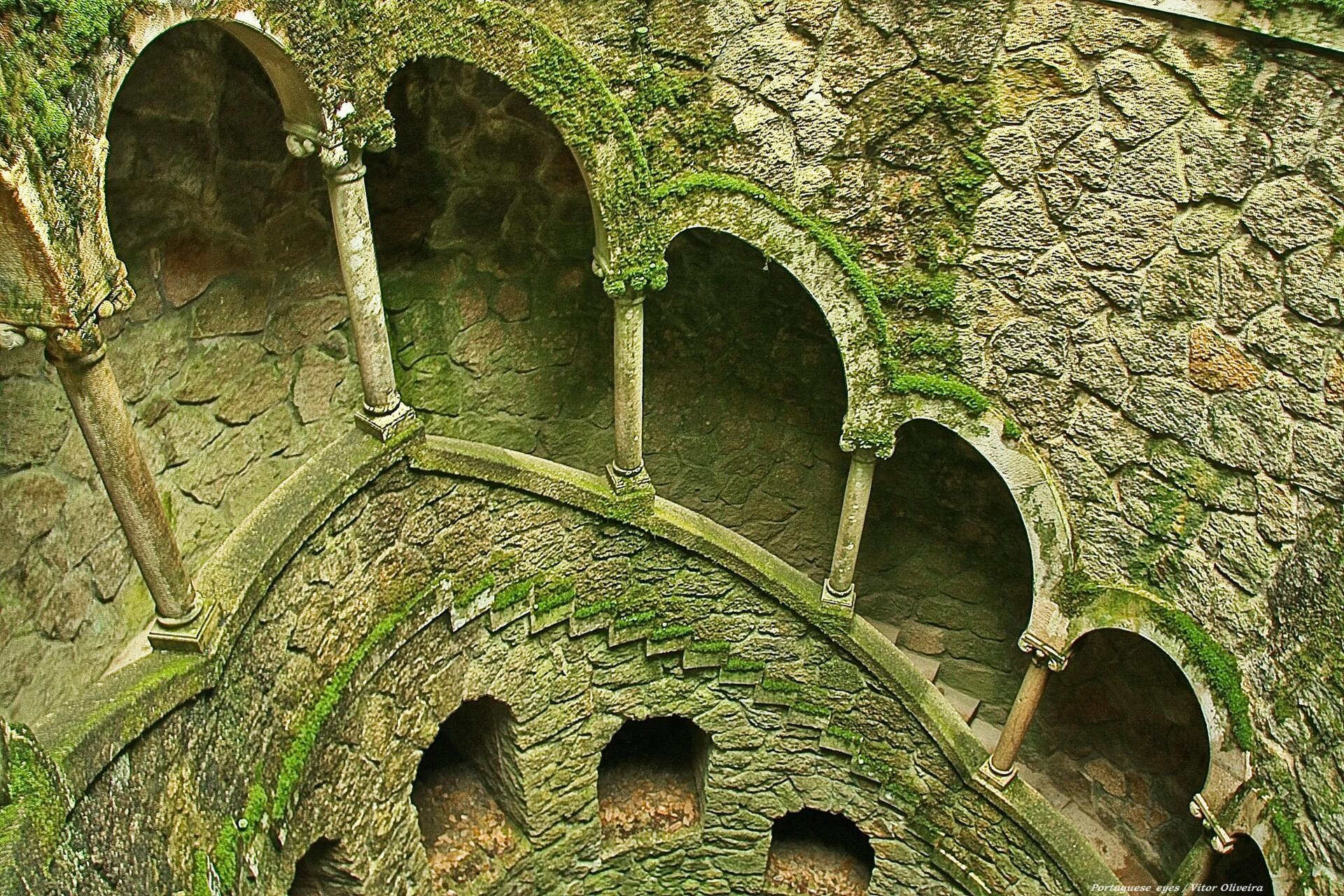
Tip: book a timed ticket online, and go to the well first thing after you enter or late in the afternoon. Midday is when the queue is longest. Bring a small torch for the tunnels.
The Moorish Castle
Older than everything else in Sintra, the Castelo dos Mouros was built more than a thousand years ago when the region was under Moorish rule. Its walls run along the rocky ridge like a mini Great Wall, with towers and battlements to climb. For active children it is often the highlight of the day: real stone steps, real towers and huge views over Sintra, Pena Palace and the ocean.
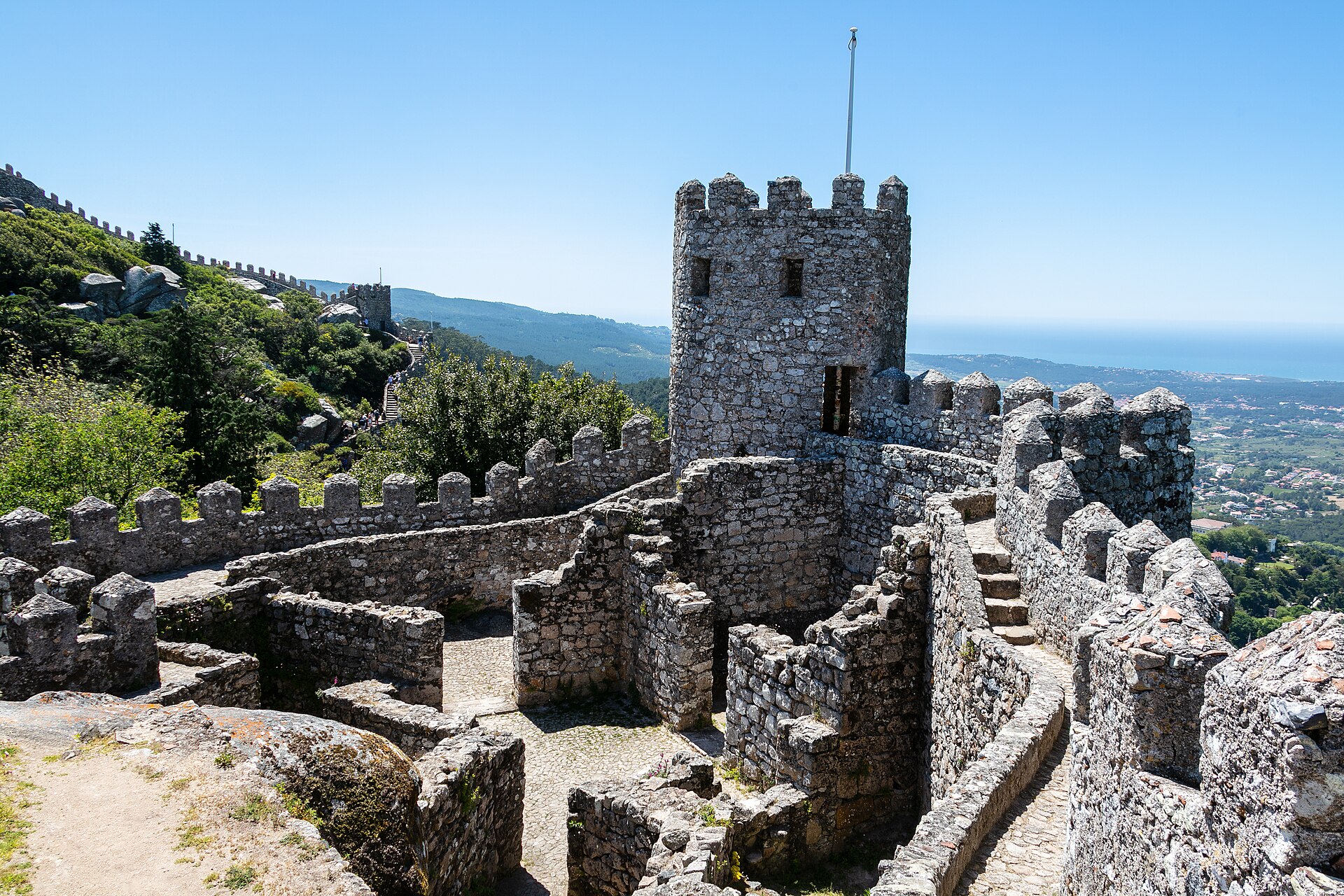
Note: the walls are uneven and some sections are steep and exposed. Hold little hands, wear proper shoes and avoid it on very windy or wet days.
Sintra village and its sweets
The historic village sits below the hills around the National Palace of Sintra, recognisable by its two giant white conical chimneys. Wander the lanes, then reward everyone with Sintra’s two famous pastries:
- Travesseiros: “pillows” of flaky puff pastry filled with almond and egg cream, best eaten warm.
- Queijadas de Sintra: small, crisp tarts with a sweet cheese and cinnamon filling.
The historic Casa Piriquita is the classic place to try them. Be prepared to queue, but it moves quickly.
Cabo da Roca: the edge of Europe
Twenty minutes’ drive west, Cabo da Roca is the westernmost point of mainland Europe. A red-topped lighthouse, wild cliffs above the Atlantic and a stone monument marking “where the land ends and the sea begins” make it a great end to the day, especially at sunset. Children love standing at the “end of Europe”.
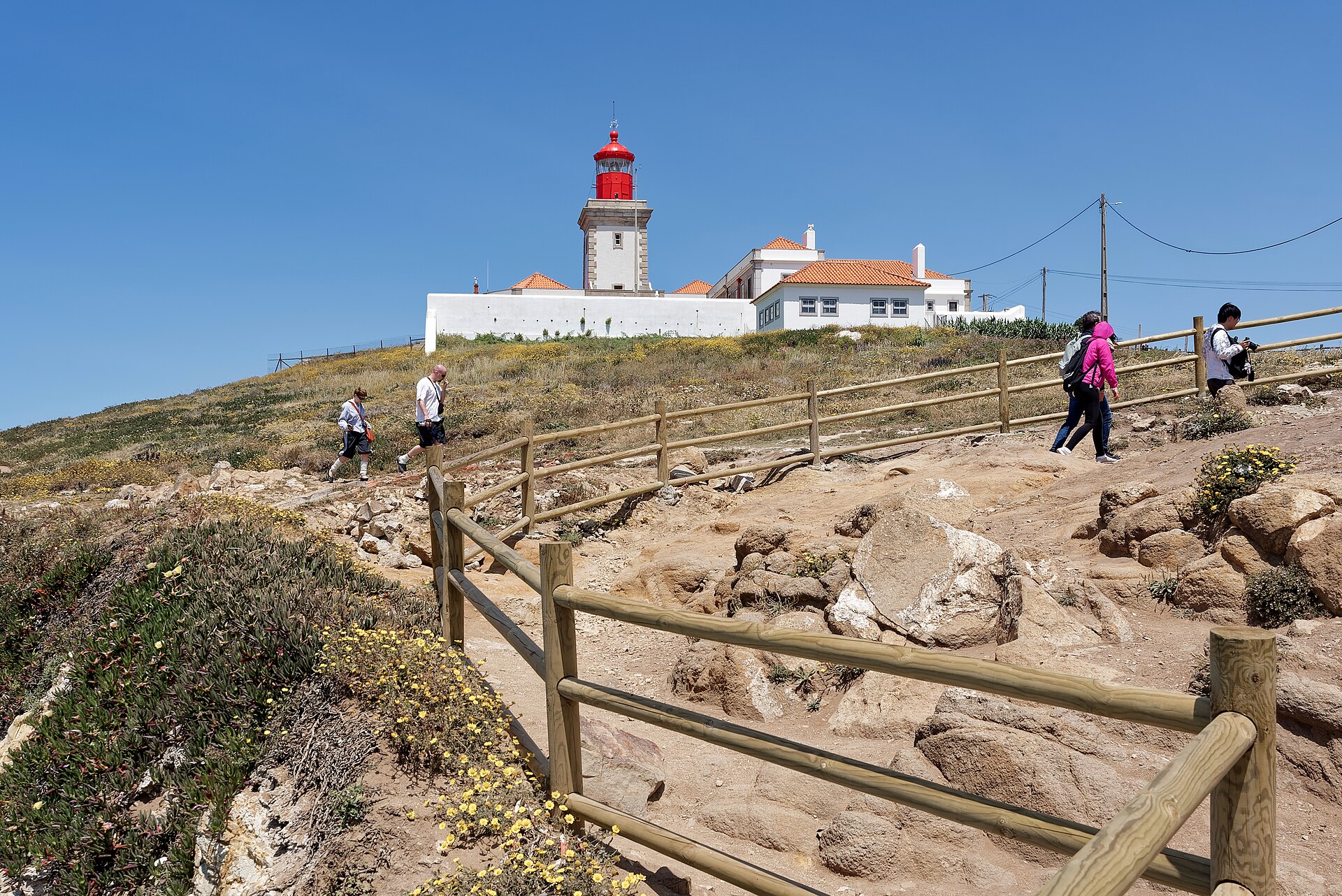
Safety: the cliffs are very high and it is often extremely windy. Keep children well behind the fences and away from the edges.
Getting there and getting around
- By train: the easiest option from Lisbon. Trains from Rossio station take about 40 minutes to Sintra.
- Bus 434: from Sintra station, this circular bus links the village, the Moorish Castle and Pena Palace. Bus 435 serves Quinta da Regaleira and Monserrate. In peak season the buses fill up and the climb can be slow.
- By car: Sintra has introduced new traffic restrictions to protect the historic centre, and parking near the monuments is very limited. The best option is the free Lourel car park, with around 540 spaces, connected to the monuments by buses 434 and 435. You can buy monument tickets and a 24-hour bus pass together online.
- Tuk-tuks and taxis: handy with tired children, but they also face restrictions in the historic centre.
A family plan for one day
- Early morning: arrive by 9:00 and head straight up to Pena Park and Palace with your timed ticket.
- Late morning: walk across to the Moorish Castle (there is a footpath through the forest between the two).
- Lunch: back in the village, followed by travesseiros.
- Afternoon: Quinta da Regaleira and the Initiation Well.
- Sunset: drive or take the bus to Cabo da Roca.
That is a full day. With younger children, choose two sights and enjoy them slowly; Sintra is even better over two days.
Best time to visit
Sintra has its own microclimate: often cooler, greener and mistier than Lisbon. Spring and autumn are ideal, and weekdays are much quieter than weekends. In summer, arrive as early as possible. Bring a light jacket at any time of year, even when Lisbon is warm.
Where to stay
Most families visit Sintra as a day trip from Lisbon or Cascais. Staying a night in Sintra itself, though, lets you see the palaces early and enjoy the village after the crowds have gone. There are lovely guesthouses and family apartments in restored villas, and the beaches of Cascais and the Sintra coast are close by for a day by the sea.
Why Sintra is unforgettable
Few places feel so much like stepping into a storybook. Between a coloured palace in the clouds, a well that spirals into the earth and castle walls on a mountain ridge, Sintra turns a day trip into an adventure children will talk about for years.